

Akasa Air Takes Flight; Nod for International Operations to Saudi Arabia, Kuwait, and Qatar

In a groundbreaking move, Akasa Air has received the government’s approval to extend its flight operations beyond India’s borders, signaling the airline’s entry into the international market. The destinations initially granted are Saudi Arabia, Kuwait, and Qatar, heralding a new era for this low-cost carrier. This development aligns with India’s modified 0/20 rule, facilitating international flights once an airline possesses a minimum of 20 aircraft in its fleet without any time-based constraints, a shift from the previous 5/20 rule. However, a notable challenge for Akasa Air lies in securing access to destinations like Dubai, where existing bilateral agreements have nearly been exhausted, underscoring the intricacies of international aviation regulations. The airline’s upcoming journey abroad will undoubtedly shape its role in the global aviation landscape.
India-Middle East-Europe Economic Corridor; A Pathway to Global Connectivity

The India-Middle East-Europe Economic Corridor, an initiative arising from India’s G20 presidency, is gaining momentum with international support. This corridor promises robust infrastructure investments, economic integration, and enhanced connectivity across Asia, West Asia, the Middle East, and Europe. It consists of two key corridors, emphasizing cross-border rail transit networks to boost trade and services. Additionally, the India-US Initiative on Critical and Emerging Technology (iCET) aims to strengthen technology partnerships and resilience in supply chains. These developments underscore India’s active role in global diplomacy and economic growth.
Oman LNG’s Flourishing Gas Supply Agreements in 2023 Signal Growth and Global Expansion

Oman LNG’s recent surge in gas supply agreements signifies a pivotal moment for the company and Oman’s energy landscape. With 14 binding long-term agreements inked in 2023 alone, Oman LNG solidifies its role as a major player in the liquefied natural gas market. These deals extend Oman’s reach into diverse global markets, including the Middle East, East Asia, and Europe. The commitment to supply 10.4 million metric tonnes of LNG annually from 2025 onwards underlines Oman LNG’s dedication to supporting the national economy and enhancing its strategic partnerships with international energy corporations. This impressive growth reflects Oman LNG’s efficiency and investor confidence, securing its place on the global energy stage.
Europe’s Shifting Stance on Nuclear Power and Its Impact on Clean Energy Goals

Europe’s evolving approach to nuclear power represents a significant shift in the continent’s clean energy strategy. The recent decision to allow nuclear energy for ammonia and hydrogen production is reshaping the conversation. While France stands to gain considerably due to its robust nuclear sector, the implications transcend its borders. This development has the potential to rejuvenate the nuclear industry across Europe as existing plants seek opportunities in the burgeoning hydrogen and ammonia markets. Despite persistent opposition, the decision underscores nuclear energy’s reemerging significance in Europe’s pursuit of cleaner energy solutions.
Oman LNG’s Flourishing Gas Supply Agreements in 2023 Signal Growth and Global Expansion

Oman LNG’s recent surge in gas supply agreements signifies a pivotal moment for the company and Oman’s energy landscape. With 14 binding long-term agreements inked in 2023 alone, Oman LNG solidifies its role as a major player in the liquefied natural gas market. These deals extend Oman’s reach into diverse global markets, including the Middle East, East Asia, and Europe. The commitment to supply 10.4 million metric tonnes of LNG annually from 2025 onwards underlines Oman LNG’s dedication to supporting the national economy and enhancing its strategic partnerships with international energy corporations. This impressive growth reflects Oman LNG’s efficiency and investor confidence, securing its place on the global energy stage.
Germany’s Battle to End the Ongoing Recession and Energy Crisis

Germany once hailed as an economic powerhouse, now finds itself at a crossroads. Business leaders and experts are sounding the alarm as the nation grapples with a weakening economy and the challenges of transitioning to green energy. Soaring inflation, sluggish export markets, and high energy costs loom over Germany’s economic landscape, raising concerns about its future. Amid these difficulties, Chancellor Olaf Scholz envisions a new era of economic growth through the transition to renewable energy. However, skepticism remains as experts question the immediate benefits and exorbitant costs associated with this green revolution. Germany must confront its structural weaknesses, such as bureaucracy and an ageing population while addressing industry concerns and shifting dynamics. The road ahead may be challenging, but Germany’s resilience and adaptability will determine its success in securing a prosperous future.
Baltic Wind Connector Project To be Developed Between Germany and Estonia
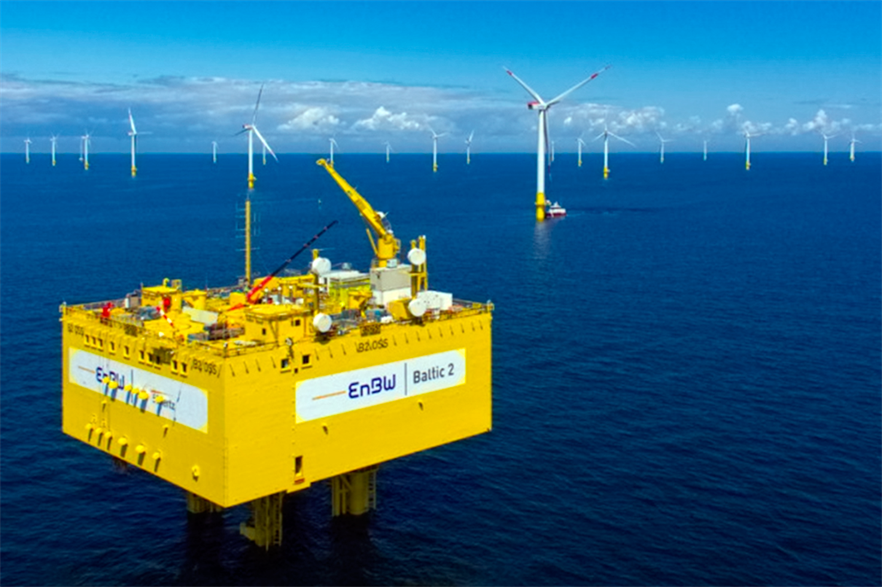
50Hertz, the German electricity transmission system operator (TSO), and its counterparts from Estonia, Latvia and Lithuania on Tuesday have agreed to jointly develop a hybrid submarine cable project “Baltic WindConnector” in the Baltic Sea between Estonia and Germany.
Food Delivery Service CoLab Joins List of Firms in Ceasing Operations in Australia

CoLab, the Australian food delivery service, has announced winding up its operations last week. CoLab, is the seventh food delivery brand that have closed their operations in Australia in the last one year.
CoLab is a direct-to-customer retailer website and has entered voluntary administration last Thursday after failing to gain a fresh round of funding. failing to gain financing to continue its operations. It was launched as part of a collaboration between ChefPrep and Co-lab Pantry.
In a LinkedIn post, CoLab’s co-founder and CEO Josh Abulafia said that the company’s staff had been made redundant. “It’s been a tough day for CoLab and unfortunately we have had to let the team go,” he posted.
“As a quick background we (were) in the process of closing out a new round of financing that fell through. We then had significant interest for the company to be acquired and decided to put the company into VA to help, but due to unforeseen events our timelines became truncated,” Abulafia added.
One of the major reasons for the closure of these brands is said to be challenging economic conditions resulting in a rise in the cost of living where consumers have less money to spend.
Other Firms
Earlier, Sydney-based MilkRun, which was in the headlines for promising to deliver groceries within 10 minutes a customer placed order. The firm raised more than $5759 million from some of the biggest names in Australian venture capital, including Atlassian billionare Mike Cannon-Brookes.
In an internal email to the employees on Tuesday last, MilkRuns co-founder and chief executive Dany Milham said: “I am writing to let you know that we have made the difficult decision to wind down the business, and as a result, MilkRun will cease trading this Friday.”
According to Australian media reports, despite banking an impressive $75 million funding round led by a US venture capital firm in 2022, Milham blamed worsening economic conditions for the shock collapse.
Dany Milham had already found success with fast-delivering mattress company Koala. Less than a year ago he was confidently predicting MilkRun would be bigger than Coles or Woolworths within ten years.
The other five delivery service firms, which shut down in the Australian market, included three local startups promising 10-minute deliveries – ‘Send’ in May 2022, ‘Voly’ and British-owned ‘Deliveroo,’ both of which ceased operations in November 2022.
DashMart, which was launched in Sydney, Melbourne, and Brisbane by food courier platform DoorDash in January 2023 claiming it would succeed where its rivals had failed, closed its operations last month.
While Melbourne food delivery platform Providoor became the sixth delivery firm to enter liquidation last month, Germany’s Foodora collapsed in August 2018.
Istanbul International Airport was Busiest in March
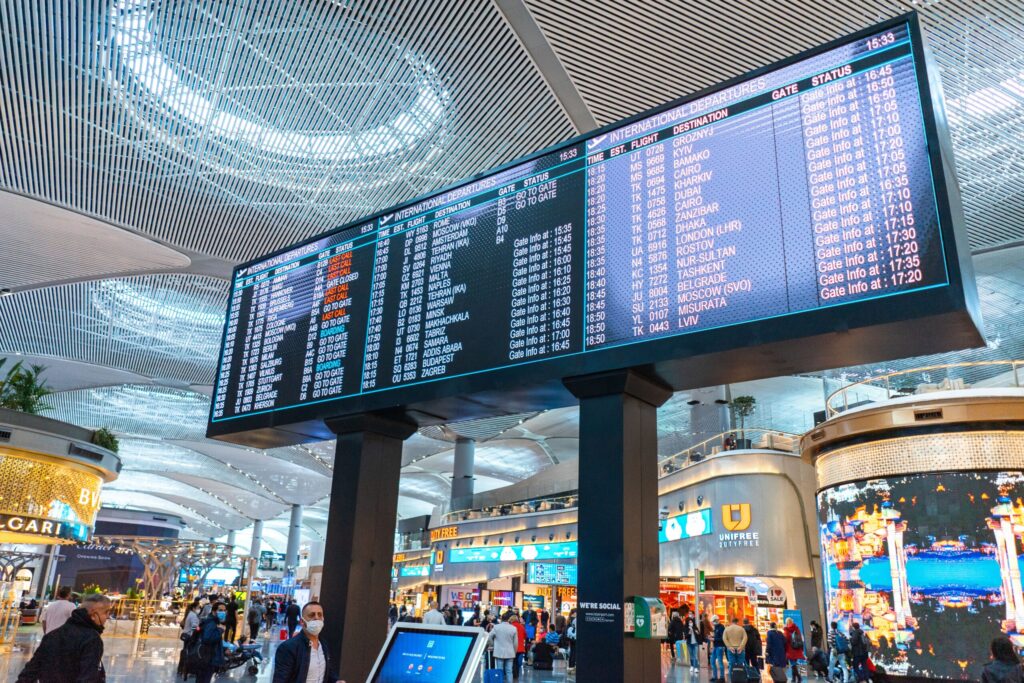
Turkiye’s mega airport Istanbul was the busiest one in Europe, with an average of 1,263 daily flights in March, according to EUROCONTROL. Sabiha Gokcen, also in Istanbul, ranked 17th on the list with an average of 549 daily flights.
Exclusive: Airbus roiled by poor start to 2023 as industrial pressure grows
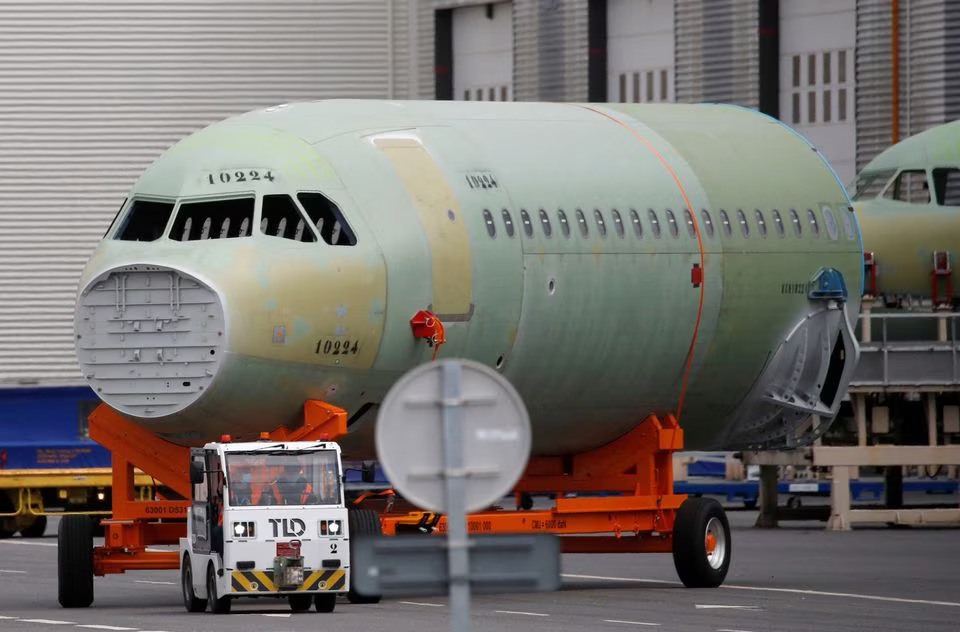
The boss of European planemaker Airbus (AIR.PA) has read the riot act to executives about disappointing deliveries in January and warned them that in 2023 Airbus cannot deliver fewer jets than its now-abandoned target for 2022, industry sources said