

Bank of England Holds Steady Amidst Economic Challenges

The Bank of England’s recent decision to maintain historically high-interest rates reflects its commitment to navigating a challenging economic landscape. Despite acknowledging the potential for a recession and minimal growth, the bank reiterated its stance with a 6-3 vote. Their primary concern is addressing soaring inflation levels, with no immediate plans for rate cuts, according to BoE Governor Andrew Bailey. The bank, however, remains cautious due to global uncertainties, such as the Middle East conflict and strong wage growth, which may sustain inflationary pressures. Despite this caution, it anticipates a return to its 2 percent inflation target by the end of 2025.
The Delicate Balancing Act of Interest Rates, Bank of England’s Dilemma Amidst Persistent Inflation

Navigating the complexities of persistent inflation, the Bank of England faces a crucial dilemma. While some economists argue for sustained higher interest rates to combat firmly-rooted inflationary pressures, others predict this may lead to a mild recession. The Bank’s cautious approach, likened to the steady ascent of Table Mountain, aims to strike a balance between inflation control and economic stability. Recent economic resilience, with a 0.5% growth in July, muddles the picture, suggesting that a premature rate reduction might not be warranted. As the Bank monitors these variables, the path forward remains nuanced and pivotal for the UK’s economic trajectory.
Middle East’s Asset Management Industry Navigates Growth Challenges and Seeks New Avenues

The Middle East’s asset management industry defies economic headwinds with $1.3 trillion in assets under management, marking a remarkable 7 percent compound annual growth rate. While outperforming European and American peers, leaders in the region face a critical turning point. They must reassess strategies to regain profit growth and navigate a changing landscape. Prioritizing profitability, exploring high-growth alternative investments, and embracing technology for personalized client experiences are key strategies for success. The industry’s resilience and adaptability position it for continued growth in the Middle East’s dynamic market.
Middle East’s Asset Management Industry Outperforms Global Trends, Fosters Transformation

In a remarkable feat, the asset management industry in the Middle East has defied global economic challenges, recording a growth rate of 7% in 2022 and reaching a staggering $1.3 trillion in assets under management. This accomplishment starkly contrasts the global trend, where the asset management industry witnessed a decline of 10%. According to a Boston Consulting Group (BCG) report, asset managers in the region are urged to transform their businesses in the face of market uncertainties, fee compression, rising costs, and technological advancements. The Middle East’s positive growth outlook, driven by higher oil income and favourable equity market developments, sets it apart from its global counterparts. However, the report emphasizes the need for asset managers to adapt and diversify their revenue streams while leveraging technology to create unique client experiences. This transformation is crucial for sustained profitability in an ever-changing market landscape. By embracing change and exploring alternative investments, asset managers in the Middle East can position themselves as leaders in the global market.
European shares drop as policymakers seek to tame hot inflation
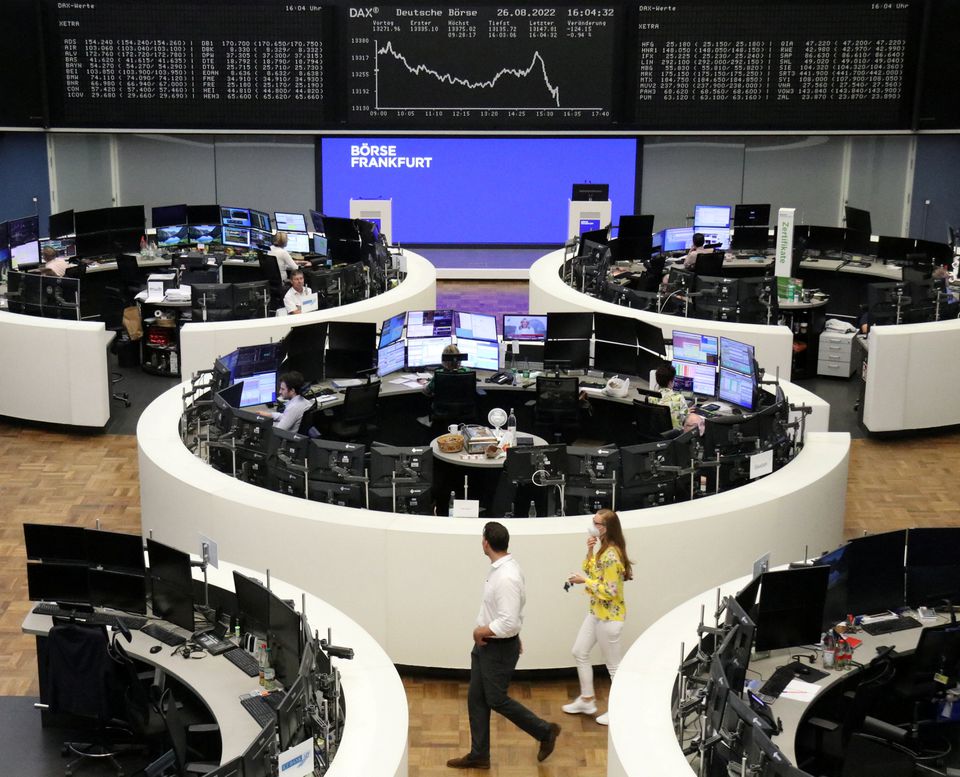
European shares dropped on Monday, while bond yields surged as comments from central bank policymakers heightened fears of aggressive measures to stamp out inflation amid rising risks of a recession.
Oil prices slip ahead of U.S. inventory data

Oil prices fell more than $1 a barrel on Wednesday, under pressure from global central bank efforts to limit inflation and ahead of expected builds in U.S. crude inventories as fuel demand weakens.