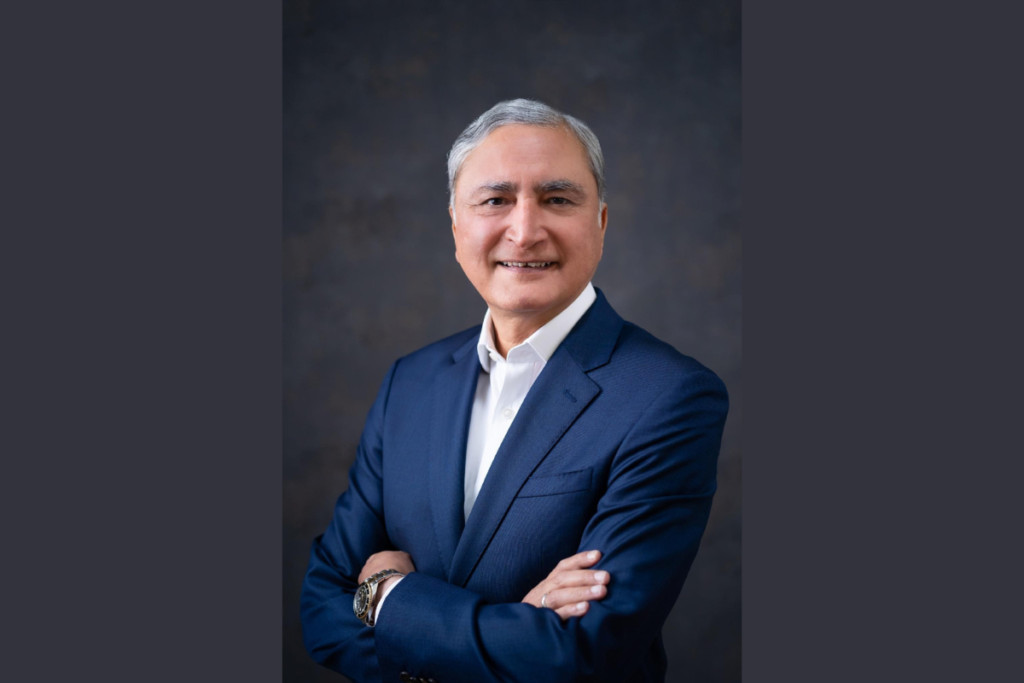


At Point Zero Forum 2026, Bybit Co-Founder and CEO Ben Zhou outlined a bold vision for the future of cryptocurrency exchanges, arguing that the next phase of digital finance will be defined not by trading speed but by tokenization, liquidity, artificial intelligence, and global financial connectivity.
Key Highlights:
- Ben Zhou says crypto exchanges are evolving into comprehensive financial infrastructure providers.
- Tokenization expands access but sustainable liquidity remains the industry’s biggest challenge.
- Future exchanges will function as global liquidity hubs connecting fragmented markets.
- Instant blockchain settlement could reshape traditional financial market structures.
- Artificial intelligence is expected to become the primary interface for managing increasingly complex financial ecosystems.
Beyond the Trading Engine
The role of cryptocurrency exchanges is undergoing a profound transformation as digital assets, tokenized finance, and artificial intelligence continue to redefine global financial markets. Speaking during the Point Zero Forum 2026 in Zurich, Ben Zhou, Co-Founder and CEO of Bybit, shared his vision of an industry moving well beyond its origins as a marketplace for buying and selling cryptocurrencies.
Participating in a fireside discussion titled The Exchange as Settlement Layer: How Tokenization Rewires the Role of a Crypto Platform, Zhou argued that exchanges are gradually becoming the financial infrastructure connecting payments, investments, tokenized assets, and real-world finance.
“The role of exchanges is changing fundamentally,” Zhou said. “In the early days, exchanges competed on matching engines, latency, and execution speed. Today, we are becoming gateways to payments, tokenized assets, real-world assets, and global financial access.”
His remarks reflected the rapid evolution of blockchain technology, where exchanges increasingly serve as bridges between decentralized finance (DeFi), traditional financial institutions, and emerging digital economies.
Tokenization Is Only the Beginning
While tokenization has become one of the defining trends across financial markets, Zhou believes much of the industry’s attention remains focused on the wrong challenge.
According to him, converting traditional assets into blockchain-based tokens certainly democratizes access, but accessibility alone does not create healthy markets.
“Tokenization solves access, not liquidity,” Zhou explained. “Making an asset available globally does not automatically create demand for it. The next question is who will buy it, where liquidity comes from, and how that liquidity moves across borders and jurisdictions.”
Governments, financial institutions, and investment firms worldwide are accelerating efforts to tokenize assets ranging from government bonds and money market funds to real estate and other real-world assets. However, Zhou stressed that long-term success depends on developing vibrant secondary markets capable of sustaining continuous trading activity.
Without sufficient liquidity, tokenized assets may remain technically accessible but commercially inactive, limiting their broader financial value.
Exchanges Will Become Global Liquidity Networks
As blockchain technology enables programmable finance and near-instant settlement, Zhou believes exchanges will increasingly differentiate themselves through their ability to aggregate liquidity rather than simply process transactions.
He compared modern exchanges to international aviation hubs that facilitate movement and connectivity rather than merely providing landing strips.
“Settlement is only one part of the equation,” Zhou noted. “Airports are important not simply because planes land there, but because they become hubs for connectivity, services, and movement. Exchanges are similar. Liquidity, distribution, and access remain the core value proposition.”
Under this vision, exchanges will evolve into sophisticated networks that connect fragmented pools of capital across different jurisdictions, asset classes, and regulatory environments.
This role could become especially significant as tokenized securities, stablecoins, and digital assets continue expanding across global markets.
Preventing a Fragmented Digital Economy
Despite the enthusiasm surrounding tokenization, Zhou warned that the industry faces a growing risk of fragmentation.
As financial institutions issue their own versions of digital assets across multiple blockchain ecosystems, interoperability may become one of the defining challenges of the coming decade.
“We are already seeing multiple versions of the same assets emerge across different ecosystems,” Zhou said. “The challenge of the next decade is not creating more tokenized assets. It is creating interoperability and shared liquidity across those assets.”
Without standardized connectivity between blockchain networks, digital assets could become isolated within separate ecosystems, reducing efficiency and creating unnecessary market friction.
For the digital asset economy to mature, Zhou believes industry participants must prioritize interoperability alongside innovation.
Instant Settlement Could Reshape Financial Markets
Another major shift highlighted during the discussion was the growing impact of blockchain-enabled instant settlement.
Traditional financial markets often depend on clearing houses and intermediaries to manage settlement risk during transaction periods that can span several days.
Blockchain infrastructure, however, has introduced the possibility of settling transactions almost immediately.
While this could significantly improve efficiency and reduce operational risk, Zhou emphasized that technology alone cannot replace every function currently performed by financial institutions.
“Technology can automate settlement, but trust still matters,” he said. “Institutions that provide custody, governance, and legal certainty will continue to play an important role in financial markets.”
Rather than eliminating existing institutions, blockchain may instead redefine their responsibilities within a faster and more automated financial ecosystem.
Artificial Intelligence Will Simplify Financial Complexity
Looking beyond tokenization, Zhou identified artificial intelligence as the next transformative force shaping financial services.
As digital financial platforms expand to include payments, investing, wealth management, decentralized finance, and tokenized assets, users could struggle to navigate increasingly sophisticated ecosystems.
Artificial intelligence, he believes, will become the layer that simplifies these complexities.
“The future financial platform will become too complex for users to navigate manually,” Zhou explained. “AI will act like a personal financial assistant that understands user goals and automatically connects users with the right products, opportunities, and strategies.”
Rather than merely responding to commands, future AI systems may proactively manage portfolios, recommend financial products, optimize investments, and deliver personalized financial guidance based on individual objectives.
A New Vision for Digital Finance
Bybit’s vision reflects a broader transformation taking place across the global financial landscape. Cryptocurrency exchanges are steadily expanding beyond their traditional role as trading venues to become integrated financial platforms supporting payments, custody, tokenized assets, and intelligent financial services.
As tokenization continues gaining momentum and artificial intelligence becomes more deeply embedded within financial ecosystems, the competitive landscape may increasingly revolve around interoperability, liquidity, and user experience rather than transaction speed alone.
For industry leaders like Ben Zhou, the future belongs to exchanges capable of connecting markets, simplifying complexity, and serving as trusted infrastructure for the next generation of global finance.