

The digital asset exchange launches a World Cup AI Agent and a tournament-long prediction campaign, blending sports data, gamified participation and crypto rewards in a bid to redefine how fans engage with global football
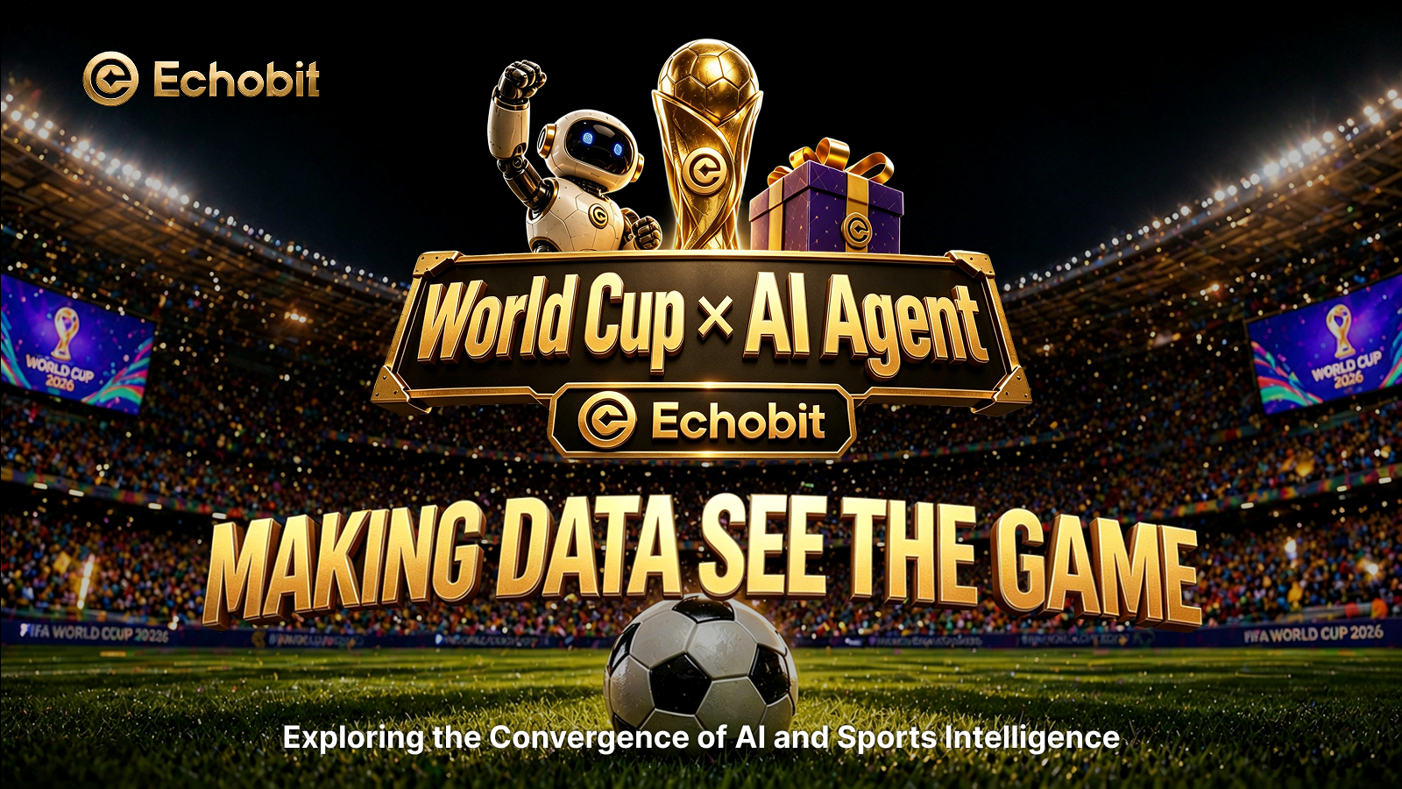
As the 2026 FIFA World Cup captures the attention of football fans across continents, global digital asset exchange Echobit is attempting to place itself at the intersection of sport, artificial intelligence and Web3 engagement. The company has unveiled a new World Cup AI Agent alongside a tournament-long World Cup Prediction Carnival carrying a total prize pool of $2 million in USDT, positioning the event as both a fan engagement initiative and a showcase for AI-led sports interaction.
At a time when AI agents are rapidly moving beyond productivity tools and into consumer-facing applications, Echobit’s latest campaign reflects a wider shift in how digital platforms are trying to turn live events into immersive, data-driven ecosystems. Rather than simply attaching a sponsorship message to football fever, Echobit is building an entire interactive layer around the tournament, where fans can use AI-generated insights, prediction tokens, trading competitions and leaderboard mechanics to participate more actively in the World Cup narrative.
The centrepiece of the campaign is the Echobit World Cup AI Agent, a tool designed to process large volumes of football data and translate them into accessible tournament insights. According to the company, the AI Agent aggregates data from established sports data providers including API-Football, TxODDS, SportsDataIO and Sportmonks. These feeds allow the system to continuously track team information, historical match records, squad performance, real-time developments and tournament statistics as the competition unfolds.
Using those datasets, the AI Agent produces visualised advancement probabilities and match-related insights based on factors such as historical team performance, recent form, player output and broader tournament momentum. Echobit is careful not to position the tool as a crystal ball. Instead, it frames the AI Agent as a reference model intended to help users navigate the overwhelming volume of information that surrounds a global sporting event of this scale. Football remains too volatile, emotional and momentum-driven to be reduced to a guaranteed prediction engine, but the company argues that AI can still offer a more structured way of understanding patterns and probabilities.
That distinction is important because the campaign is not just about analysis. It is about participation. Alongside the AI Agent, Echobit has rolled out the World Cup Prediction Carnival, which converts tournament engagement into a multi-layered digital competition. Users can earn exclusive prediction tokens called Football through activities such as daily check-ins, deposits, trading and referrals. Those tokens can then be used to support national team advancement predictions across different stages of the World Cup.
The structure is designed to keep users engaged throughout the tournament rather than around isolated matches. Participants who back teams that progress share in the corresponding reward pools according to the proportion of Football tokens they contributed. More than $1.28 million USDT has been allocated specifically to advancement prediction rewards, with the pool increasing as the tournament progresses. By the final round, the reward pool rises to $600,000 USDT, creating a clear incentive for sustained participation over the course of the competition.
Echobit has also layered in additional gamified features to broaden the campaign beyond straightforward prediction mechanics. A World Cup-themed penalty shootout mini-game gives users another way to earn Football rewards through daily interaction, while squad-based and individual trading competitions bring a community and performance element into the mix.
In the squad competition, users can join World Cup-themed teams and contribute to rankings through futures trading activity. At the end of the tournament, members of the top six squads will share a reward pool of $170,000 USDT. Alongside this, an individual trading leaderboard will rank participants by cumulative profits, with the top 100 users splitting $50,000 USDT. The first-place finisher is set to receive as much as $15,000 USDT.
Taken together, these layers reveal the broader ambition behind the campaign. Echobit is not simply offering football predictions or an AI tool in isolation. It is constructing an event ecosystem where sports fandom, token incentives, AI-generated intelligence and platform activity all reinforce one another. For a crypto exchange operating in an increasingly crowded and regulation-conscious environment, this kind of engagement strategy serves multiple purposes. It can drive user activity, deepen brand stickiness, encourage repeat platform visits and position the company as an innovator in experiential Web3 marketing.
The launch also reflects a larger trend in digital finance and online platforms: the race to make AI feel useful, interactive and commercially relevant outside traditional enterprise settings. In recent years, AI has already reshaped areas such as search, content creation and trading analytics. AI agents represent the next stage of that evolution because they do not merely display information; they organise, interpret and respond to complex inputs in ways designed to feel more actionable for the end user.
For Echobit, the World Cup offers an ideal proving ground. It is global, emotionally charged, rich in real-time data and naturally suited to prediction, discussion and social participation. By combining AI analysis with tokenised interaction and tournament-based rewards, the company is effectively testing how sports events can become live engagement engines for digital platforms.
Still, the model comes with caveats. Echobit explicitly states that the World Cup AI Agent is for informational purposes only and does not constitute investment advice or guarantee outcomes. That disclaimer matters, especially given the mix of sports enthusiasm, crypto rewards and speculative activity embedded in the campaign. While the AI Agent may help users contextualise form and probability, football remains unpredictable, and users are ultimately being encouraged to participate in a high-engagement ecosystem tied to a digital asset platform.
Even so, the initiative is a notable example of where fan engagement is heading. The World Cup has long been a showcase for athletic excellence and global storytelling. Increasingly, it is also becoming a testing ground for new digital experiences. Echobit’s latest campaign suggests that the future of sports interaction may not stop at watching, cheering or even betting. It may evolve into something more layered, where AI, gamification, token economies and live data merge into a new kind of tournament participation.
If that vision gains traction, the World Cup AI Agent may be remembered not just as a promotional feature, but as part of a broader shift in how technology platforms turn major cultural events into interactive digital ecosystems.