



By Adam Mikulski, General Director at Medical Air Service
When global sporting events are being organized, the natural focus is on the fixtures, venues, and movements of players and fans. One aspect that remains hidden behind the scenes is the medical logistics of international sports travel.

Sporting events on the scale of the FIFA World Cup include tens of thousands of athletes, coaches, and team support staff, millions of spectators, and numerous other participants. All this creates a highly complex logistical situation, which requires careful planning and anticipation of potential problems.
International tournaments like the World Cup not only call for readiness to respond to health emergencies but also enable swift and effective cross-border response.
To put it simply, the medical logistics of such sporting events are not about visibility. They are about readiness to help the patients in distress without losing precious minutes.
Planning ahead for the worst-case scenario
People’s perception of sports medicine is usually associated with helping athletes in stadiums. Yet the more complicated situation occurs outside them.
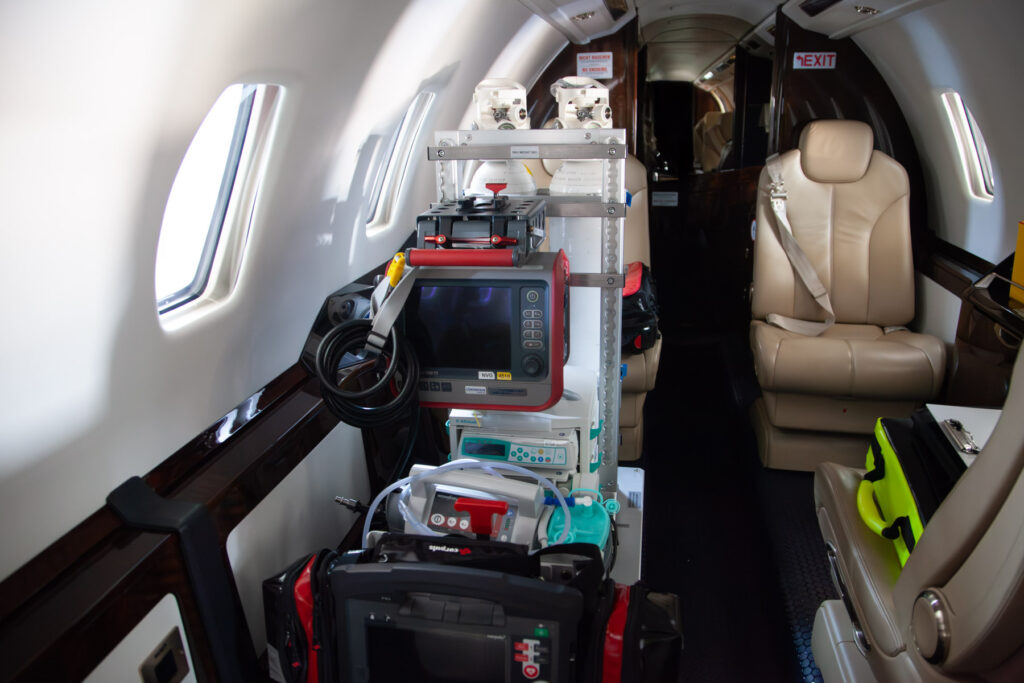
Severe injuries, medical issues among spectators, or unexpected problems involving athletes or team personnel may require medical repatriation abroad. This type of transportation is highly demanding, as it requires the coordination of multiple factors in a very short time.
Planning the logistics of such operations starts months in advance. It involves analyzing the medical facilities in host countries and other locations, assessing airfield access options, and related matters. During international tournaments like the World Cup, the number of factors increases exponentially.
International medical transport has to cope with demand coming from multiple directions at once, as well as fluctuating levels of airspace and airport slot congestion.
The nature of international medical flights makes it necessary to adapt rapidly to changing conditions.
When injury becomes an international operation
Recently, a situation that exemplifies international medical transportation occurred in 2025. The Bayern Munich player Jamal Musiala was hospitalized abroad after breaking his leg during a Club World Cup match. He was then transferred via medical air ambulance to his home country, Germany.
Such operations are likely to become common in the future, especially during the World Cup events. Once the patient requires medical repatriation, the process starts immediately.
A number of factors need to be considered in such situations, including the patient’s readiness for transport, the required level of assistance, and appropriate equipment. When transporting critically ill individuals in intensive care, the aircraft must be appropriately equipped and ready to depart as soon as possible.
While doing so, it is necessary to obtain several clearances to ensure that both the departure and landing airports are aware of the operation and agree to accept the flight. In some cases, diplomatic channels have to be used to obtain the required permits in a timely manner.
Getting permission to land is only one aspect of such operations. Hospitals must be notified in advance, and the aircraft must be provided with proper ground handling.
Spectators, not just athletes
While the examples described above involve professional athletes, spectator patients constitute the majority of cases of international medical repatriation.
Mass gatherings increase the risk of health problems, especially among elderly or unwell individuals traveling long distances. Heat, unfamiliar climate, fatigue – all of these factors increase the risk of medical complications during a trip.
Usually, the need for international transportation arises after a hospital visit, not as a result of an accident in a stadium.
Patients are not critically ill but still require assistance. They need to be either medically supervised throughout the journey or transported using a specially equipped air ambulance. A medical escort on a commercial aircraft is also a possibility if the conditions are met, especially considering that the healthcare system in countries like the U.S. is expensive, thus making it a cheaper solution to get back home and continue treatment there.
Aircraft are only one part of the system
The natural association related to medical transportation is air ambulances and planes. However, the actual medical transportation process is far from being dependent on aircraft.
The quality of operations in international medical logistics depends on coordination. Multiple parties have to be coordinated: medical crew, flight crew, ground handlers, hospitals, patients’ relatives – all this has to be done perfectly, and experience comes into play in these cases.
It is crucial for members of the medical crew not only to be skilled in their practice but also to know aviation rules and be able to work in accordance with them. Proper equipment must be secured in the plane, power sources must be compatible with the aircraft’s power grid, and contingency plans must be developed in case of an emergency landing.
Weather conditions, airspace congestion, and mechanical problems – all these can affect the timing of the process. Unlike regular passengers, medical patients cannot afford to wait for their plane to arrive.
The pressure of time and expectation
International sporting events create a special atmosphere of heightened expectations and eagerness. The need to respond promptly is inevitable in such conditions.
Athletes’ teams are eager to ensure that their members get the best treatment available anywhere in the world. Fans and spectators expect to return home quickly in case of a problem.
Medical transportation services have to meet these expectations, despite the inherent danger of rushing the operation and violating the basic principle that patients must be stabilized before transfer.
In addition, expectations must be managed properly. Medical transportation services must ensure that everything runs smoothly from the moment of the request until patients reach their destination.
In essence, as international sporting events grow larger and more popular, more challenges await medical organizations. But for those well prepared, these challenges can be opportunities to deliver the same service they provide yearly, but now on a larger scale, right in the spotlight.
An interconnected ecosystem
The medical logistics behind global sports travel are not designed to be visible. Their success is measured by outcomes, not attention.
Nevertheless, their importance cannot be overstated. They serve as a safety mechanism that allows international sporting events to be organized. Without medical support services, the risks associated with mass international trips would be much higher.
All medical organizations operating in this ecosystem will have to adhere to the same principles: readiness, coordination, and effective execution of the task.
About Medical Air Service
Medical Air Service provides worldwide medical evacuation, medical repatriation, and medical escort services, transporting patients who cannot be treated where they are and transferring them to the required destinations on board fast medical jets or with medical escorts on commercial flights.