

As the United States approaches its 250th anniversary, SeaPak is using the national milestone to reflect on a legacy that stretches back nearly eight decades, tracing how a coastal seafood company helped reshape convenience, distribution and the frozen food experience for households across the country.
Anniversary campaigns often risk sounding ceremonial. SeaPak’s latest one has the advantage of being tied to a genuinely consequential chapter in American food history.
As the United States marks its 250th anniversary, SeaPak Shrimp & Seafood Co. is using the moment to look back on its own role in reshaping how seafood reached American households. What begins as a commemorative brand message is, in fact, also a story about logistics, food innovation and the long commercial arc of making once-regional products accessible to a mass national market.
SeaPak’s roots go back to 1948, when the Sea Island Packing Company was established on a former naval training base on St. Simons Island, Georgia. At the time, seafood consumption in the United States remained heavily constrained by geography. Fresh seafood was largely a coastal privilege, and the infrastructure required to transport it efficiently across the country was still underdeveloped. That was the problem SeaPak helped solve.
The company became an early pioneer in using Individual Quick Freezing, or IQF, technology for shrimp, flash-freezing product at peak freshness to preserve taste and texture while dramatically extending its reach beyond the coast. In the context of the post-war American food economy, that was not a small operational improvement. It was part of a broader transformation in how food was stored, transported and consumed, one that would eventually underpin the modern frozen foods category.
SeaPak’s ambitions did not stop there. As demand for frozen seafood expanded and refrigerated trucking networks remained limited, the newly renamed SeaPak Corporation formed Aero Foods and used nearby naval runways to fly its products directly to grocers around the country. It is the kind of detail that gives the company’s heritage story unusual commercial weight. SeaPak was not merely selling seafood; it was helping invent a distribution model capable of turning a coastal staple into a national retail proposition.
That is what makes the brand’s America 250 message more interesting than a standard patriotic marketing campaign. It taps into a period when American consumer markets were being reshaped by infrastructure, refrigeration and post-war mobility, and positions SeaPak as a participant in that larger story of access and convenience. The company’s history is, in many ways, a reminder that food brands do not become household names by flavour alone. They become household names by solving the very practical question of how products reach consumers at scale.
Megan Grinstead, Vice President of Customer and Consumer Brand Marketing at Rich Products Corp., SeaPak’s parent company, framed the anniversary as an opportunity to reflect on the ingenuity that has shaped how Americans live, eat and connect. SeaPak, she said, is proud to be part of that story by helping bring seafood from the coast to homes nationwide.
It is a neat piece of positioning, but it also reflects a broader truth about the frozen food aisle. What once might have been seen as a category driven mainly by convenience has evolved into something more layered, shaped by quality expectations, shifting eating habits and a growing appetite for quick, restaurant-style meals at home. Frozen seafood in particular has benefited from that shift, as consumers look for proteins that feel slightly more elevated than standard weeknight staples but remain easy to prepare.
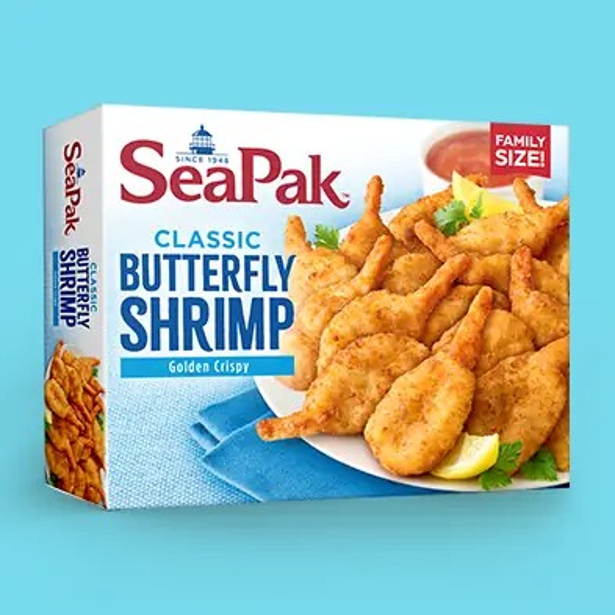
SeaPak has spent the better part of the modern grocery era sitting in that space. Its portfolio is designed around the idea that seafood should feel approachable rather than intimidating, convenient without seeming compromised and versatile enough to move from family dinners to casual entertaining. In that sense, the company’s heritage narrative is not just about the past. It is also a way of reinforcing its relevance to present-day eating habits, where convenience, quality and familiarity increasingly have to coexist.
That balance matters in a food market that has become intensely competitive. Legacy brands are under pressure from private label challengers, premium insurgents and changing consumer expectations around health, sourcing and culinary sophistication. Heritage can be an asset, but only if it is translated into a contemporary proposition. SeaPak’s messaging suggests it understands that. Rather than presenting itself simply as an old seafood brand with a long history, it is leaning into the idea of being a longstanding innovator that anticipated the consumer need for accessible, high-quality seafood long before convenience became a defining retail battleground.
Today, the company says it is the number one selling retail frozen shrimp brand within the specialty seafood category in the United States, a position that gives it both credibility and a challenge. The credibility lies in scale and familiarity. The challenge lies in ensuring that familiarity does not drift into complacency at a time when consumer food culture is moving quickly, shaped by wellness trends, value consciousness, premiumisation and the social media-fuelled reinvention of home cooking.
For readers tracking how heritage brands keep themselves commercially relevant, SeaPak offers a useful case study. It shows how a company can use an anniversary not merely to celebrate longevity, but to remind consumers and retail partners of the operational innovation that underpinned its growth in the first place. More broadly, it illustrates how brand history can be turned into a strategic asset when it is framed around transformation rather than nostalgia.
There is also a subtle national symbolism to the timing. America’s 250th anniversary will prompt many brands to revisit their place in the country’s story, but few will be able to tie themselves to a tangible shift in how Americans ate and shopped. SeaPak can. Its history sits at the intersection of food access, refrigeration, distribution and the rise of convenience culture, all themes that have shaped the American consumer economy far beyond the seafood category.
For WEM India readers, the deeper business lesson is that legacy alone is rarely enough. What endures is legacy attached to a market-making idea. SeaPak’s contribution was not simply in selling shrimp; it was in helping create the infrastructure and consumer confidence that made frozen seafood a viable national category. In a market where many heritage brands are trying to rediscover their relevance, that distinction matters.
As the company looks ahead, it says it remains committed to the same principles that drove its earliest innovations: finding new ways to connect consumers with the foods they love and making high-quality seafood accessible to more households. Whether framed as brand storytelling or retail strategy, that remains a commercially sensible promise.
Readers interested in more reporting on consumer brands, business strategy and the evolution of legacy companies can explore additional features at WEM India. More on SeaPak’s history, products and brand story is available on the company’s official website at SeaPak.