
U.S. Bank’s enhanced automotive cards emphasize dealership and loan redemptions, while their value to drivers still depends on spending habits and borrowing terms
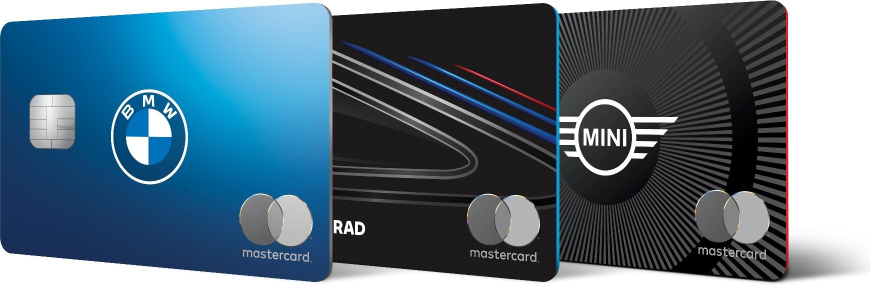
U.S. Bank and BMW Financial Services North America are refreshing their BMW, MINI and BMW Motorrad. Mastercard offerings around a straightforward proposition: reward customers for staying within the brands’ orbit. Announced October 13, 2026, the expanded benefits combine bonus earning categories, brand-linked redemption value and introductory financing. For American drivers, the important question is not simply how many points a card earns, but what those points are worth after borrowing costs.
The announced earning structure includes three points per dollar on brand purchases and eligible gas, electric-vehicle charging and toll purchases. A welcome offer provides 10,000 points after $500 in spending within 90 days. Eligibility and other terms apply. Those features may align with a driver’s existing expenses, but they should not be read as a reason to increase spending merely to collect rewards.
Redemption is central to the pitch. The companies say points have twice the value when redeemed at dealerships or applied to a BMW Financial Services loan or lease, with 10,000 points equaling $200 through those channels. That makes the welcome offer’s advertised redemption value concrete, subject to the applicable terms. It does not establish that every redemption option offers the same value.
“BMW is the leading premium automotive brand that has created fierce loyalty with its customers. U.S. Bank’s upgraded BMW-branded credit card is designed to reward this loyalty.” That characterization comes from Tanuj Suri, U.S. Bank’s head of co-brand cards. The design described in the announcement does reinforce brand loyalty by linking enhanced redemption value to dealerships and vehicle financing rather than presenting all uses of points as equivalent.
The card also carries no annual fee and an introductory annual percentage rate of 0% for 12 billing cycles, followed by a variable APR of 17.74% to 30.74%. Those are financing terms, not rewards benefits. Twelve billing cycles should not casually be substituted with a different time period, and the introductory rate should not be treated as the card’s permanent borrowing cost.
A separate Extend Pay feature offers six months without fees or interest for eligible purchases, according to the announcement. This requires its own eligibility review. It is not a blanket statement that all purchases can be financed free for six months, nor should it be merged with the card’s introductory APR into a single, broader financing promise. Cardholders need to examine the conditions governing each feature.
For consumers who pay balances in full, the practical comparison centers on eligible spending, usable redemption channels and competing cards. For those who carry balances beyond the introductory period, interest costs become a separate consideration. A rewards balance applied to a vehicle payment does not erase the obligation to repay the credit-card account or change the APR stated in its terms.
The loan-and-lease redemption option is a notable part of the proposition because it links everyday purchases to an existing automotive expense. Still, the announcement’s arithmetic should remain bounded: 10,000 points can represent $200 in the specified channels. That example does not disclose every operational requirement for applying rewards, and customers should verify the rules before assuming a particular payment will be reduced automatically.
The refresh gives BMW-group customers another way to consolidate spending and extract value from purchases they already make. It does not make the card universally attractive or establish that rewards outweigh financing costs for every household. The sound U.S. consumer takeaway is to evaluate the earning structure, redemption restrictions and borrowing terms separately. Loyalty can generate benefits, but only the account’s actual terms determine their cost.
Source: Bussinesswire/ US Bank