


From odor detection to classroom innovation, DFRobot showcases how open source hardware and artificial intelligence are shaping the future of learning and maker ecosystems
In a rapidly evolving technology landscape where artificial intelligence is increasingly moving from theory to application, DFRobot is positioning itself at the intersection of accessibility and innovation. At the recent Robot Hokoten event in Akihabara, the company presented a compelling vision of how AI powered systems can be integrated into everyday problem solving and education.
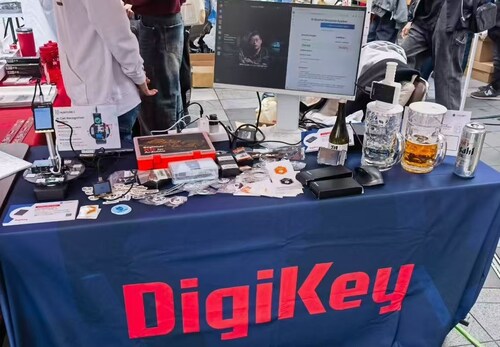
Appearing at the DigiKey booth, DFRobot introduced two distinctive projects that highlight the growing synergy between open source hardware and artificial intelligence. These included an Electronic Nose gas recognition system and an AI powered cell recognition teaching platform. Together, they demonstrated how complex technologies can be simplified into hands on, practical tools for both makers and students.
The Electronic Nose project stood out as a powerful example of edge AI in action. Built using compact embedded hardware, the system integrates multiple gas sensors with a microcontroller running a TinyML model. This allows it to perform real time odor analysis directly on the device, without relying on cloud connectivity. In a live demonstration, the sensor was placed above a glass of beer. Within seconds, the system collected and processed the data, identifying the odor profile and transmitting it to a compact computing module for interpretation.
What makes this process particularly significant is its fully local execution. The system uses a small form factor computing platform to generate descriptive insights, effectively translating raw sensor data into meaningful output. This capability opens up a range of possibilities across industries, from food quality monitoring and fermentation processes to environmental sensing and safety applications. It reflects a broader shift towards decentralized AI, where intelligence is embedded directly into devices rather than dependent on external infrastructure.
According to Xia Qing, the project illustrates how makers can bridge the gap between sensing and interpretation. By combining TinyML with local AI models, users can create systems that not only detect data but also contextualize it in intuitive ways. This approach democratizes innovation, making advanced capabilities accessible to a wider audience.
Equally impactful was the AI powered cell recognition system, designed specifically for educational environments. Built using the HUSKYLENS 2 vision sensor and the UNIHIKER K10 development board, the platform brings artificial intelligence into the classroom in a tangible and engaging manner. Students can observe cells under a microscope while the system performs real time identification and classification, turning abstract concepts into interactive learning experiences.
The underlying technology enables both pre trained and custom models to run efficiently, allowing students and educators to explore the full lifecycle of AI development. From collecting data to training models and deploying them for real time inference, the system offers a complete learning framework. This hands on approach aligns closely with modern STEAM education principles, where experiential learning plays a central role in building understanding.
Beyond the individual projects, DFRobot’s presence at the event underscored its broader commitment to expanding the open source hardware ecosystem. Its collaboration with DigiKey reflects a shared vision of lowering barriers to entry for developers, educators, and innovators worldwide. By combining hardware accessibility with educational resources and global distribution, the partnership aims to accelerate the adoption of AI driven solutions across diverse sectors.
Events like Robot Hokoten serve as important platforms for bridging innovation and community. They bring together engineers, hobbyists, educators, and industry leaders, fostering an environment where ideas can be tested, refined, and shared. For DFRobot, the event was not just an opportunity to showcase products, but to demonstrate how technology can be made more inclusive and impactful.
The implications of these innovations extend beyond the maker community. As industries increasingly adopt AI and automation, the need for accessible tools and education becomes critical. By focusing on usability and real world application, DFRobot is contributing to a future where advanced technologies are not confined to specialized labs but are available to anyone with the curiosity to explore them.
Ultimately, the projects presented in Akihabara highlight a fundamental shift in how technology is developed and deployed. Artificial intelligence is no longer limited to large scale systems or distant cloud servers. It is becoming embedded, local, and interactive, empowering individuals to solve problems in real time.
As the boundaries between hardware, software, and intelligence continue to blur, initiatives like these signal a new era of innovation. One where learning is hands on, solutions are practical, and technology is truly within reach.