
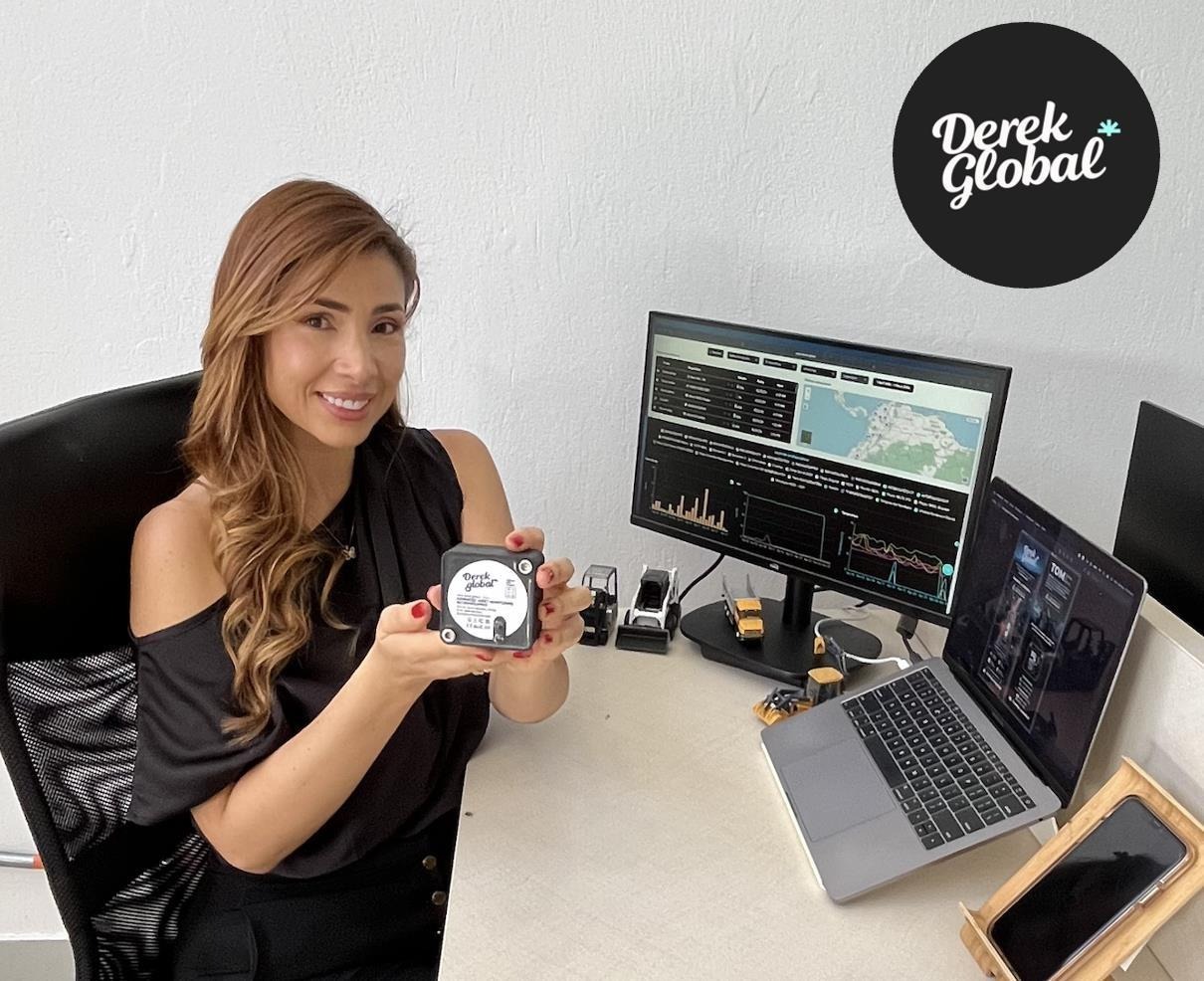

From construction equipment and logistics fleets to yachts and defense assets, Derek’s new TOM device combines AI enabled monitoring, global connectivity, and real time alerts to bring greater visibility and security to high value assets.
In an economy increasingly shaped by mobility, automation, and distributed operations, ownership alone is no longer enough. Businesses today are expected to know not only where their assets are, but how they are being used, whether they are operating efficiently, and when something begins to go wrong.
Across industries such as construction, logistics, mining, transportation, agriculture, and security, the cost of uncertainty can be staggering. A misplaced excavator, an overheated shipment, unauthorized equipment usage, or unnoticed operational damage can trigger delays, financial losses, insurance
disputes, and safety risks that ripple far beyond a single asset.
It is within this evolving landscape that Derek Advanced Tracking Systems LLC has launched its new monitoring platform, centered around an IoT device known as TOM, short for Track on Machine.
The company describes the solution as a next generation asset monitoring system capable of delivering proactive oversight across a broad range of operational environments. Designed for sectors including construction, defense, transportation, logistics, equipment rental, public
infrastructure, agriculture, and home use, the platform aims to transform how organizations monitor and protect valuable equipment and machinery.
What distinguishes the system is not merely location tracking, but the breadth of environmental and operational intelligence it attempts to provide.
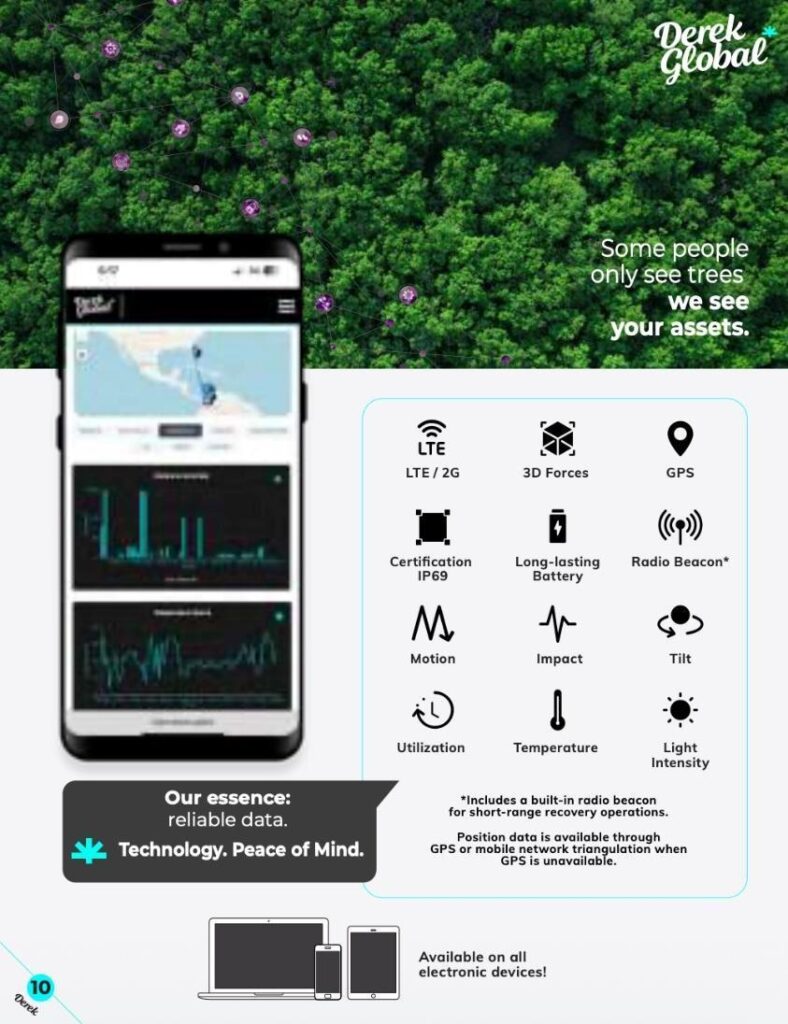
The TOM device is equipped with sensors capable of monitoring movement, position, impacts, tilt, temperature, light exposure, 3D forces, and equipment usage time. Rather than functioning as a passive GPS tracker, the platform operates more like a continuous digital observer, transmitting real time operational insights through automated alerts delivered via WhatsApp, SMS, or email.
In practical terms, the shift is significant.
Traditional tracking systems often rely on users actively checking dashboards or requesting reports. Derek’s approach moves toward predictive awareness, where the system itself identifies abnormal conditions and immediately communicates them to asset owners or operators.
For industries managing large fleets or high value machinery across dispersed geographies, such visibility can carry operational and financial implications.
A construction company, for instance, may receive immediate alerts if heavy equipment moves
outside designated zones after working hours. Logistics operators can monitor temperature sensitive cargo in transit. Equipment rental firms can verify actual usage time and operating conditions. Fleet managers can assess impact events, tilt behavior, or abnormal motion patterns that may indicate misuse or accidents.
The platform’s technical design also reflects the increasingly global nature of asset management itself.
Weighing only 170 grams and compact enough to be discreetly installed without interfering with electrical systems, the TOM device supports 2G, 3G, 4G, and LTE M connectivity while offering
worldwide data coverage across the Americas, Europe, Asia, Oceania, and Africa. The device carries IP69K certification, positioning it for harsh operational environments where exposure to dust, water, vibration, and extreme conditions is common.
Its encapsulated lithium batteries are designed to last up to five years, minimizing maintenance demands for operators overseeing equipment deployed in remote or difficult to access locations.
The launch also highlights the growing convergence between physical infrastructure and cloud based intelligence.
Derek Advanced Tracking Systems has aligned itself with Amazon Web Services as part of its broader technological strategy, integrating hardware and software development with cloud infrastructure capable of supporting large scale monitoring and analytics.
According to José Caraballo, the company’s ambition extends beyond operational efficiency alone.
“We are launching Derek Global with a mission to bring peace of mind to asset owners,” he stated. “We want them to sleep soundly once again.”
That language reflects an increasingly important dimension of industrial technology: emotional reassurance.
As businesses become more decentralized and operational ecosystems grow more complex,
technology providers are no longer selling devices alone. They are selling visibility, predictability, and confidence. In industries where downtime, theft, equipment misuse, or asset loss can generate
significant disruption, peace of mind becomes a measurable business value.
Derek’s expansion strategy also points toward broader international ambitions. While headquartered in Delaware, the company has established subsidiaries in Colombia and Estonia to support
operations across Latin American and European markets. The firm says it intends to invest in local partnerships, skilled employment creation, and sector specific innovation tied to industries including defense, logistics, mining, agriculture, and infrastructure.
The timing may prove advantageous.
Global demand for IoT enabled monitoring systems continues to rise as organizations seek smarter methods for managing distributed assets. The rapid growth of automation, predictive maintenance systems, AI driven analytics, and connected infrastructure is reshaping operational expectations
across both public and private sectors.
At the same time, concerns around security, efficiency, sustainability, and operational resilience are pushing companies toward technologies capable of delivering more granular, real time insights into asset behavior.
Derek’s TOM platform enters that environment as part of a wider technological shift where machines are no longer simply operated. Increasingly, they are observed, analyzed, and interpreted continuously through connected intelligence systems.
In many ways, the evolution reflects the broader trajectory of modern industry itself.
The future of asset management may no longer depend solely on ownership or utilization. It may depend on visibility. On knowing not only where an asset exists, but what story its data is constantly telling.