



Sydney, Australia, May 2026 — Australia’s technology and enterprise software sector is entering a new phase of artificial intelligence-led transformation as Atlassian expands its AI-powered collaboration ecosystem across global enterprise markets. The company’s latest product updates and platform enhancements reflect a broader shift toward intelligent automation, workflow optimization, and AI-assisted productivity tools within modern digital workplaces.
Headquartered in Sydney, Atlassian has increasingly positioned itself at the center of enterprise AI adoption through its suite of collaboration platforms, including Jira, Confluence, Trello, and Jira Service Management. The company’s latest AI initiatives focus on integrating machine learning and generative AI capabilities directly into workplace workflows, enabling teams to automate repetitive tasks, improve decision-making speed, and enhance cross-functional collaboration.
According to recent company updates, Atlassian has expanded its AI offerings through its “Atlassian Intelligence” framework, which introduces generative AI features across its core products. These capabilities include automated summarization of project documentation, intelligent ticket classification, predictive workflow recommendations, and AI-assisted content generation for enterprise teams.
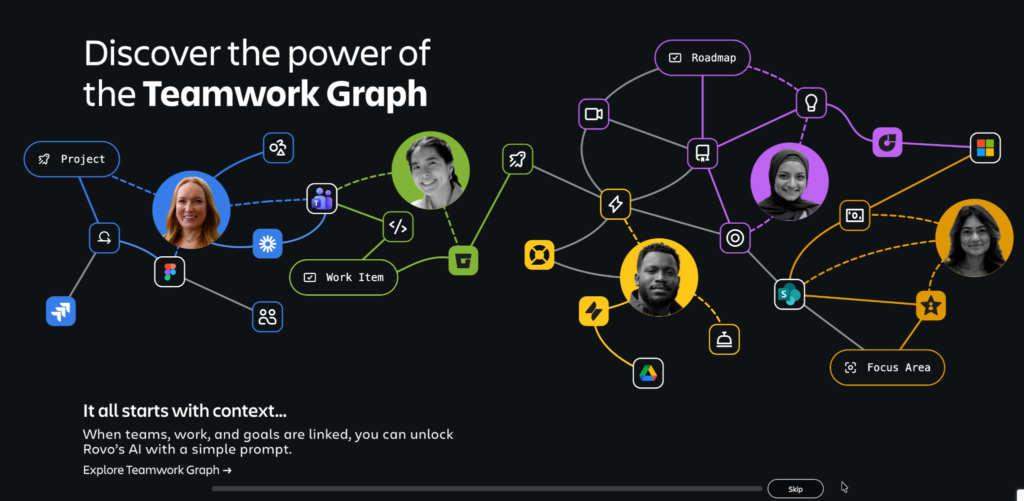
Image Source: www.atlassian.com
Industry analysts say the expansion reflects a broader global trend in which enterprise software providers are embedding AI directly into productivity platforms rather than offering standalone AI tools. This approach allows organizations to integrate artificial intelligence into daily operations without requiring significant changes to existing workflows or enterprise infrastructure.
Atlassian executives have emphasized that AI adoption within enterprises is shifting from experimental use cases toward operational integration. The company’s strategy focuses on enhancing team productivity by reducing manual coordination work, improving project visibility, and enabling faster decision-making across distributed teams.
The AI-powered features introduced by Atlassian are designed to support a wide range of industries including software development, financial services, healthcare, manufacturing, and government operations. By embedding intelligence into workflow systems, Atlassian aims to streamline how organizations plan, track, and deliver complex projects at scale.
Australia’s broader technology ecosystem is also experiencing significant momentum in AI development and adoption. Government-backed initiatives supporting digital innovation, data infrastructure, and startup ecosystems have contributed to rising investment in AI research and enterprise software development across the country.
Recent industry reports suggest that Australian enterprises are increasingly prioritizing AI integration to address productivity challenges, skills shortages, and rising operational costs. Organizations are adopting AI tools to automate customer support, enhance cybersecurity monitoring, improve supply-chain forecasting, and accelerate software development cycles.
According to Atlassian’s internal research insights, knowledge workers spend a significant portion of their time on coordination tasks rather than core problem-solving activities. The company argues that AI-driven automation can reduce this inefficiency by streamlining communication, centralizing documentation, and improving task prioritization across teams.
The rollout of Atlassian Intelligence also reflects growing competition among global technology firms to dominate the enterprise AI productivity market. Companies such as Microsoft, Google, and Salesforce have similarly introduced AI-enhanced workplace tools, intensifying the race to define the future of AI-powered enterprise software.
However, Atlassian’s approach is distinct in its focus on deeply integrated workflow systems rather than isolated AI assistants. By embedding AI directly into project management and collaboration tools, the company aims to ensure that artificial intelligence becomes a natural extension of daily work processes rather than a separate tool layer.
Industry experts believe this integration-first strategy could significantly influence how enterprises adopt AI over the next decade. Rather than replacing human decision-making, AI systems are increasingly being positioned as augmentation tools designed to enhance productivity and reduce cognitive load on employees.
Atlassian’s continued expansion in AI also aligns with broader Australian government priorities focused on strengthening the nation’s position in global technology markets. Australia has been investing in digital transformation initiatives, including data infrastructure upgrades, cybersecurity frameworks, and AI governance policies aimed at supporting responsible innovation.
The company’s global footprint further reinforces its role as one of Australia’s most successful technology exports. With millions of users worldwide, Atlassian continues to derive a significant portion of its revenue from international enterprise clients, particularly in North America and Europe, where demand for AI-driven collaboration tools is growing rapidly.
Recent financial reports indicate that enterprise software spending remains resilient despite macroeconomic uncertainty, as organizations continue prioritizing digital transformation and productivity-enhancing technologies. Analysts say AI adoption is now one of the primary drivers of enterprise IT spending across global markets.
Sustainability and responsible AI development have also become key focus areas for Atlassian. The company has emphasized transparency in AI model usage, data security, and ethical deployment of machine learning systems within enterprise environments. These considerations are increasingly important as businesses adopt AI tools that handle sensitive operational and customer data.
Despite strong momentum, challenges remain in the broader AI landscape, including concerns around data governance, model accuracy, regulatory compliance, and workforce adaptation. Enterprises are still navigating how to balance automation with human oversight, particularly in high-stakes decision-making environments.
Nevertheless, the adoption trajectory for AI-powered enterprise tools remains strongly upward. Industry forecasts suggest that AI integration within collaboration and productivity platforms will become standard practice across global organizations within the next few years.
For Atlassian, the continued expansion of its AI capabilities represents a strategic shift toward becoming a central infrastructure provider for the future of work. By embedding intelligence into everyday workflows, the company is positioning itself at the forefront of the enterprise AI revolution.
As Australia’s technology sector continues to expand its global influence, Atlassian’s AI-driven strategy highlights how local innovation is increasingly shaping global enterprise software trends.
With AI adoption accelerating across industries worldwide, the evolution of intelligent collaboration platforms is expected to redefine how organizations operate, communicate, and deliver value throughout 2026 and beyond.