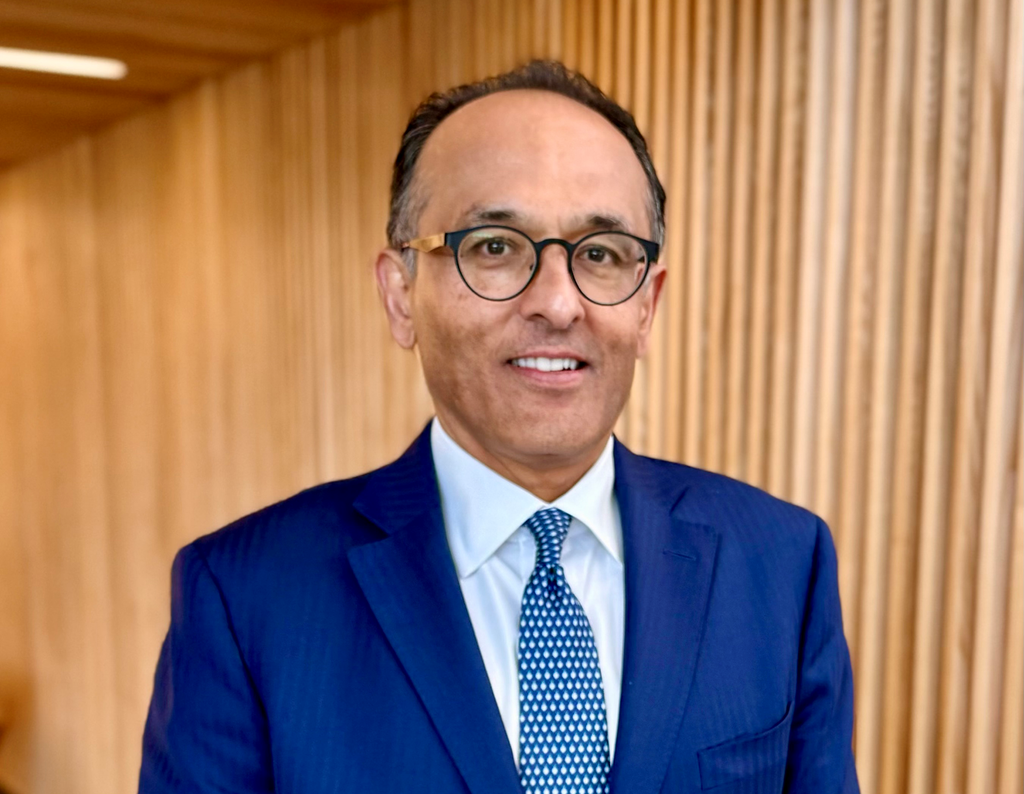



The European fintech company joined industry leaders in Dubai to discuss the future of secure cross border payments, digital finance infrastructure, and regulatory innovation across the MENA region.
In the modern financial industry, geography is becoming increasingly fluid. Payments move instantly across continents, digital wallets operate beyond borders, and fintech firms are building ecosystems that no longer belong to a single market or currency corridor. Yet even in a hyperconnected world, physical gathering points still matter.
Cities such as London, Singapore, Dubai, and New York have evolved into more than financial
centres. They have become meeting grounds where regulation, capital, technology, and ambition intersect. Increasingly, Dubai is positioning itself at the centre of that conversation.
That momentum was evident at the recent MFTA x Sandbox Security fintech gathering held in Dubai, where industry founders, executives, investors, infrastructure providers, and compliance specialists convened to discuss the rapidly evolving landscape of digital finance.
Among the companies participating was Sends, a growing fintech player focused on cross border payments and modern financial infrastructure.
Organized by the MENA Fintech Association, the gathering brought together stakeholders from across the Middle East and international markets to examine emerging developments in fintech
security, compliance frameworks, digital payment ecosystems, and AI driven financial technologies.
For fintech companies operating globally, such forums are no longer optional networking events.
They are strategic environments where regulatory alignment, partnership opportunities, and market positioning increasingly take shape.
“The event brought together an exceptionally strong network of fintech operators, compliance experts, and infrastructure providers,” said Alona Shevtsova. “For Sends, it was a valuable
opportunity to exchange perspectives on the future of secure cross border payments within the UAE fintech ecosystem and its growing connections with international markets.”
The emphasis on security and compliance reflects a broader shift occurring throughout the fintech sector itself.
Over the last decade, fintech innovation was often defined by disruption, speed, and aggressive expansion. Today, however, the conversation has matured. As digital payments become embedded within mainstream financial systems, trust, regulatory resilience, cybersecurity, and operational stability have become just as important as innovation.
This is particularly true in cross border payments, an area experiencing rapid transformation due to rising global commerce, digital banking adoption, remote work economies, and the increasing movement of capital across jurisdictions.
Companies operating in this space must now navigate a highly complex environment shaped by
evolving anti money laundering frameworks, data privacy requirements, AI governance standards, cybersecurity risks, and fragmented international regulations. In that context, fintech gatherings increasingly function as collaborative policy and infrastructure conversations rather than purely commercial showcases.
Dubai’s growing prominence within that ecosystem is no coincidence.
The emirate has spent years positioning itself as a gateway connecting Europe, Asia, Africa, and the Middle East, while simultaneously investing in financial technology, digital assets, cybersecurity infrastructure, and regulatory innovation. As global financial systems become more decentralized and digitally interconnected, Dubai’s strategic location and business friendly environment continue attracting fintech firms seeking international expansion.
For Sends, participation in such forums aligns with a broader strategy centered on global collaboration and ecosystem building.
The company has steadily expanded its industry presence through partnerships and memberships across multiple fintech organizations, including Innovate Finance, Fintech Poland, The Payments Association, and the MENA Fintech Association itself.
This network driven approach reflects a larger trend within fintech where collaboration increasingly outweighs competition alone. Payment infrastructure today depends on interoperability, compliance coordination, and strategic alliances spanning regulators, banks, infrastructure providers, and
technology firms.
The company has also positioned itself as a community builder through initiatives such as the London Fintech Meetup, a recurring event series held alongside major industry conferences.
Originally launched in London during the Pay360 conference, the meetup recently expanded internationally with a gathering in Barcelona, signaling Sends’ ambitions to deepen connections between fintech ecosystems across Europe and the MENA region.
Behind these networking initiatives lies a more fundamental industry transformation.
Fintech is entering a phase where infrastructure matters more than novelty. The next generation of financial services will likely be shaped not by isolated applications, but by integrated ecosystems capable of supporting secure, seamless, and compliant financial interactions across borders.
Artificial intelligence, embedded finance, decentralized technologies, and digital identity systems are all accelerating that shift. Yet the success of these technologies will depend heavily on the strength of the networks, governance frameworks, and collaborative ecosystems supporting them.
That is why gatherings such as the MFTA x Sandbox Security event are gaining strategic significance. They are less about publicity and more about shaping the architecture of future finance.
For companies like Sends, participation offers more than visibility. It provides access to the
conversations shaping how money, regulation, technology, and trust will interact in an increasingly interconnected financial world.
And in a sector where change often moves faster than legislation, being present in those conversations may prove just as important as the technology itself.