


TAHO, a next-generation compute infrastructure startup founded by former Meta, Google, and Snap engineers, has secured 3.5 million in seed funding to accelerate the rollout of its distributed compute platform. The company, based in Venice, Florida, is positioning itself as a foundational technology player for the AI era, offering high-performance computing at a fraction of the cost of conventional cloud environments.
The funding round was backed by strategic angel investors and seasoned technology insiders who see strong potential in TAHO’s federated approach to compute. Their confidence is anchored in a simple reality. AI workloads are rising exponentially, and existing infrastructure is struggling to keep pace. Cloud spending is climbing, GPU capacity is constrained, and enterprise teams are searching for ways to scale without burning through budgets.
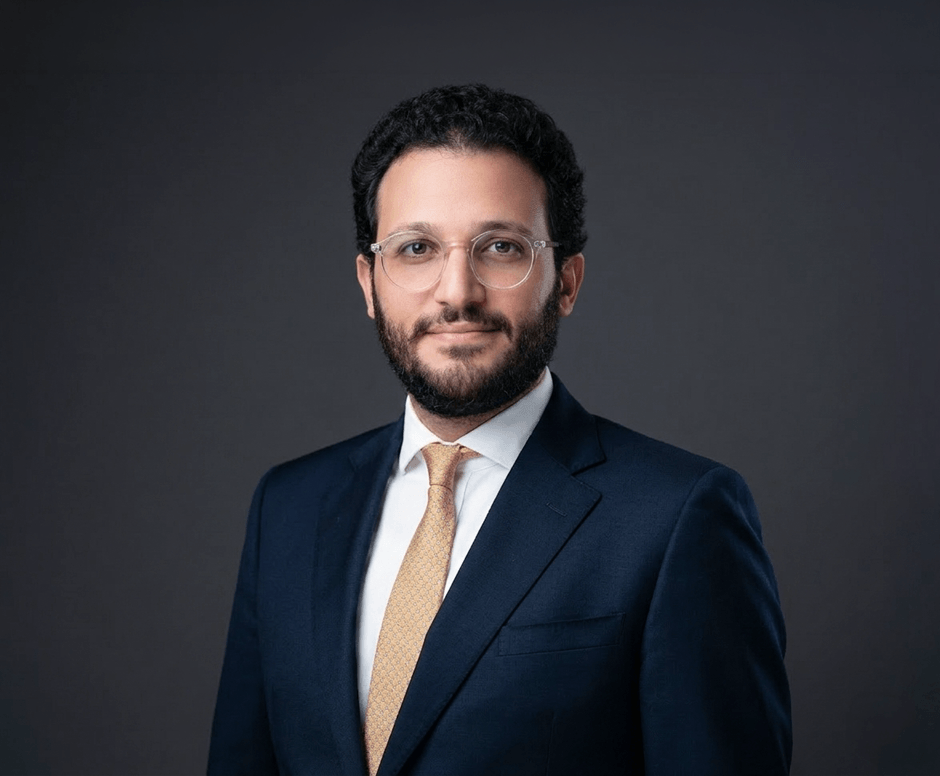
Todd Smith, TAHO’s CEO and Co-Founder, said that the company was launched to address one of the biggest operational bottlenecks in modern computing. He noted that the world is witnessing an explosion in AI adoption, yet infrastructure investments are lagging behind demand. According to him, TAHO was built to provide a universal and affordable alternative, giving AI-driven companies the ability to grow sustainably while improving performance.
TAHO
TAHO describes its platform as a modern compute fabric capable of transforming fragmented cloud infrastructure into a single intelligent supercomputer. Instead of running workloads on isolated clusters, the system weaves together machines, nodes, and distributed capacity into one coordinated layer. Large, complex workloads are broken down into discrete tasks, dispersed across available compute resources, and recomposed in real time. The platform also stores results globally, reducing repetitive processing and improving overall efficiency.
The company claims a dramatic performance advantage over existing options. Early benchmarks suggest that compute jobs can complete up to ten times faster while reducing operating costs by up to 90 percent. For enterprises running GPU-heavy workloads related to training, fine-tuning, or high-volume inference, these gains could reshape how teams approach scaling.
Michal Ashby, CTO and Co-Founder, said that traditional orchestration frameworks were not designed for deep learning models or modern distributed workloads. Most were built for containerized applications, not massive AI compute graphs. Ashby explained that TAHO takes a federated approach rather than relying on container-based tools like Kubernetes. This shift allows the platform to unify diverse hardware into one adaptive system that automatically optimizes resource allocation, data movement, and execution sequences.
The result is a decentralized compute layer that raises performance ceilings while lowering barriers to adoption. For organizations facing GPU shortages, tight budgets, and surging model sizes, TAHO is positioning itself as an essential building block of scalable AI operations.
The timing is strategic. As enterprises race to build generative AI tools, foundation models, and intelligent automation, the infrastructure challenges are mounting. Cloud providers are investing billions in new data centers, yet demand for compute continues to outstrip supply. Companies across sectors from retail and healthcare to cybersecurity and fintech are experimenting with increasingly complex models. Many face the same constraint. Their ambitions are growing faster than their infrastructure.
TAHO believes its platform offers a path forward. By abstracting away the complexity of managing distributed compute environments, the company aims to democratize access to high-performance computing. Startups, mid-size companies, and research teams can tap into AI-ready compute without paying premium cloud prices or managing intricate orchestration systems.
The newly raised funds will be used to expand the team, scale engineering capabilities, and onboard early enterprise customers. TAHO is preparing for broader availability in 2026, with pilot deployments already underway in sectors where AI workloads are particularly intensive.
Investors say the founding team is one of TAHO’s biggest advantages. With roots at Meta, Google, and Snap, its leaders have spent years working on some of the world’s most demanding compute challenges. That background, combined with a rapidly growing market need, is fueling expectations that TAHO could become a major player in next-generation infrastructure.
As AI adoption accelerates globally, the race is on to build systems powerful enough, flexible enough, and affordable enough to support its growth. TAHO is betting that the future of compute will rely on federated intelligence rather than isolated clusters. With fresh capital and increasing industry momentum, the company is entering the next phase of its journey to help shape the infrastructure backbone of the AI era.