
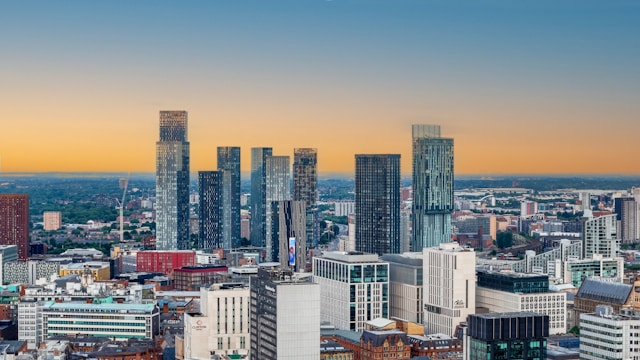

Manchester is rapidly establishing itself as one of Britain’s most influential luxury property markets as a wave of branded residences, high-rise premium developments, and international investment transforms the city’s skyline and real estate profile. Long viewed primarily as a commercial and cultural hub, Manchester is now increasingly competing with global luxury destinations through large-scale hospitality-led residential projects and ultra-premium urban regeneration schemes.
At the centre of this transformation is the landmark Nobu Hotel and Residences Manchester development, a £360 million mixed-use luxury project being developed in partnership with Salboy and Nobu Hospitality. The project, positioned within the Viadux 2 scheme, is expected to become the tallest building outside London at 246 metres and marks the first Nobu-branded residential development in the United Kingdom. (prnewswire.co.uk)
According to the official project announcement, the development will include a luxury hotel, signature Nobu restaurant, wellness facilities, and more than 450 branded residences designed around hospitality-style living and premium lifestyle experiences. Industry analysts say the project reflects a broader evolution taking place across Manchester’s luxury real estate sector, where branded residential models are increasingly reshaping buyer expectations and investor demand.
The rise of branded residences has become one of the defining trends in the global luxury property market. These developments integrate hotel-style services, concierge systems, wellness amenities, and internationally recognised luxury brands directly into residential ownership models. Manchester is now emerging as one of the UK’s most active regional cities within this segment. (TK Property Group)
Luxury real estate experts note that Manchester’s appeal is being driven by a combination of strong economic growth, large-scale infrastructure investment, and comparatively lower entry prices relative to London. International investors from the Middle East, Asia, and North America are increasingly targeting the city’s premium residential developments as long-term investment assets.
The city’s luxury market momentum is closely tied to its broader urban regeneration strategy. Former industrial districts and underutilised brownfield sites are being transformed into high-density mixed-use neighbourhoods combining residential towers, hospitality infrastructure, retail space, and public realm redevelopment.
One major example is the recently completed Waterhouse Gardens development on the former Boddingtons Brewery site. Delivered by Domis Construction and Salboy, the £195 million scheme introduced over 550 residential units alongside commercial and lifestyle infrastructure in central Manchester. Developers described the project as part of the city’s wider shift toward amenity-led urban living.

Source: Invest in Manchester
Manchester’s luxury transformation is also extending beyond residential towers into integrated lifestyle districts. Projects such as the St Michael’s development are introducing five-star hospitality concepts, branded residences, luxury retail, and premium workspace environments into the city centre. The upcoming W Manchester hotel and residence scheme is expected to further strengthen Manchester’s international luxury positioning.
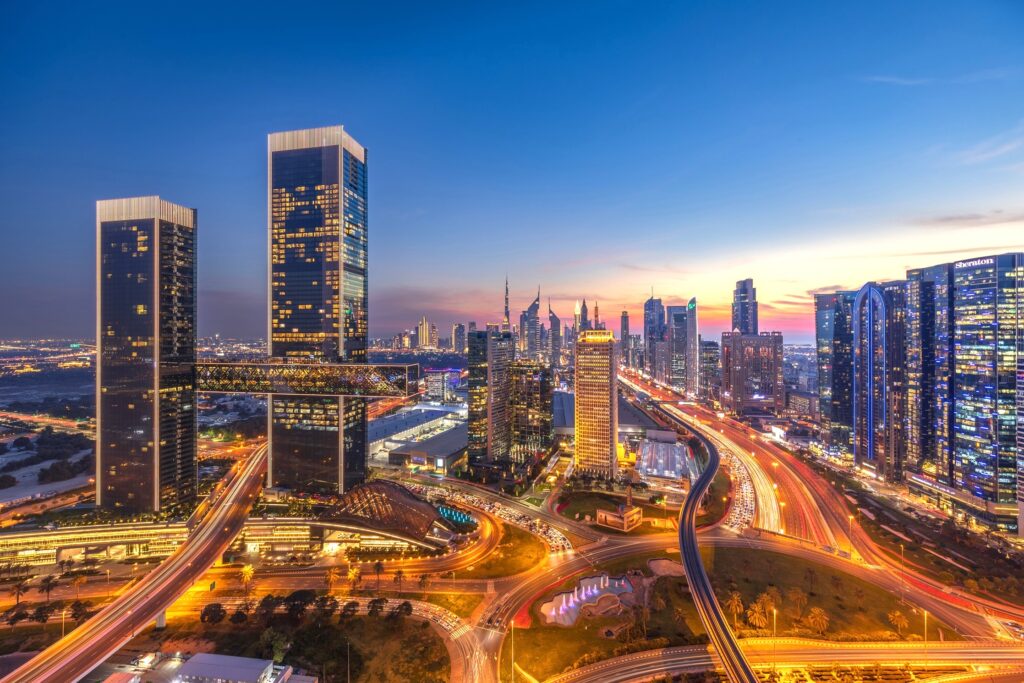
Industry observers say Manchester is increasingly benefiting from the same global forces that have driven luxury urban expansion in cities like Dubai, Miami, and Singapore. Wealth migration, international capital flows, and demand for experience-led living environments are pushing investors toward cities capable of combining economic growth with lifestyle-driven development.
Recent Financial Times reporting highlighted how Manchester’s skyline transformation is reshaping perceptions of the city globally. Luxury towers featuring penthouses, wellness centres, private cinemas, and premium concierge amenities are attracting a younger demographic of affluent professionals and international buyers seeking alternatives to London’s mature and significantly more expensive property market.
The city’s economic fundamentals are also supporting this luxury expansion cycle. Manchester continues to attract strong growth across technology, finance, media, and professional services sectors, contributing to rising demand for high-end urban housing. Improved transport connectivity and major commercial investment have further reinforced the city’s attractiveness for long-term capital deployment.
At the same time, branded residences are becoming a major strategic focus for developers across the UK. Market analysts suggest that luxury buyers increasingly value hospitality integration, security, service quality, and brand affiliation over traditional residential ownership models alone. Projects associated with internationally recognised hospitality names often command premium pricing due to perceived lifestyle and investment advantages.
Manchester’s luxury expansion has also generated debate around affordability and urban identity. Community discussions increasingly focus on balancing economic regeneration with housing accessibility and preservation of local character. However, supporters argue that premium developments are helping reposition Manchester as a globally competitive city capable of attracting international business, tourism, and investment.
Despite broader uncertainty across parts of the UK property market, Manchester’s upper-tier residential segment has remained relatively resilient due to constrained supply and sustained international interest. Developers continue to launch high-specification projects aimed at affluent domestic and overseas buyers seeking long-term asset appreciation.
The wider luxury market is simultaneously evolving toward wellness-focused and experience-driven living concepts. New developments increasingly incorporate spa facilities, fitness centres, private lounges, coworking environments, and curated lifestyle services designed to appeal to globally mobile high-net-worth individuals.
Construction activity linked to Manchester’s premium real estate sector is expected to remain strong over the coming years, particularly as multiple large-scale regeneration projects move into advanced development phases. Industry forecasts suggest the city will continue attracting investment into luxury hospitality, branded residences, and mixed-use urban redevelopment throughout the remainder of the decade.
With landmark projects such as Nobu Hospitality’s Manchester development moving forward, the city is increasingly positioning itself not simply as a regional commercial centre but as one of Europe’s emerging luxury urban destinations.
As branded living, hospitality integration, and international investment continue redefining urban real estate markets globally, Manchester appears set to remain at the forefront of the UK’s evolving luxury property landscape throughout 2026 and beyond.