
Finland-based NWB Finland Oy plans to introduce AINA Natural Water to U.S. consumers, pairing naturally filtered groundwater from Northern Finland with bag-in-box packaging designed to cut plastic use and appeal to households, offices and hospitality buyers seeking more sustainable hydration options.
Finnish company NWB Finland Oy is preparing to take a distinctly Nordic proposition to the American beverage market: premium natural groundwater from Northern Finland, packaged not in the familiar single-use bottle, but in a bag-in-box format aimed at reducing plastic consumption without sacrificing convenience. Through its flagship brand AINA Natural Water, the company says it wants to offer U.S. consumers a product that sits at the intersection of purity, practicality and environmental consciousness—three attributes increasingly shaping purchasing decisions in the global premium water market.
The planned U.S. rollout marks an important step for the Pudasjärvi-headquartered business, which was founded around a mission to develop more sustainable beverage packaging solutions. Over time, that packaging focus evolved into a broader strategy: combining environmentally minded delivery formats with one of Finland’s most marketable natural assets—its groundwater. In AINA, NWB Finland believes it has found a product capable of translating that proposition for international consumers, particularly in markets where premium bottled water demand remains robust even as scrutiny over packaging waste intensifies.
Turning Finland’s groundwater into a consumer proposition
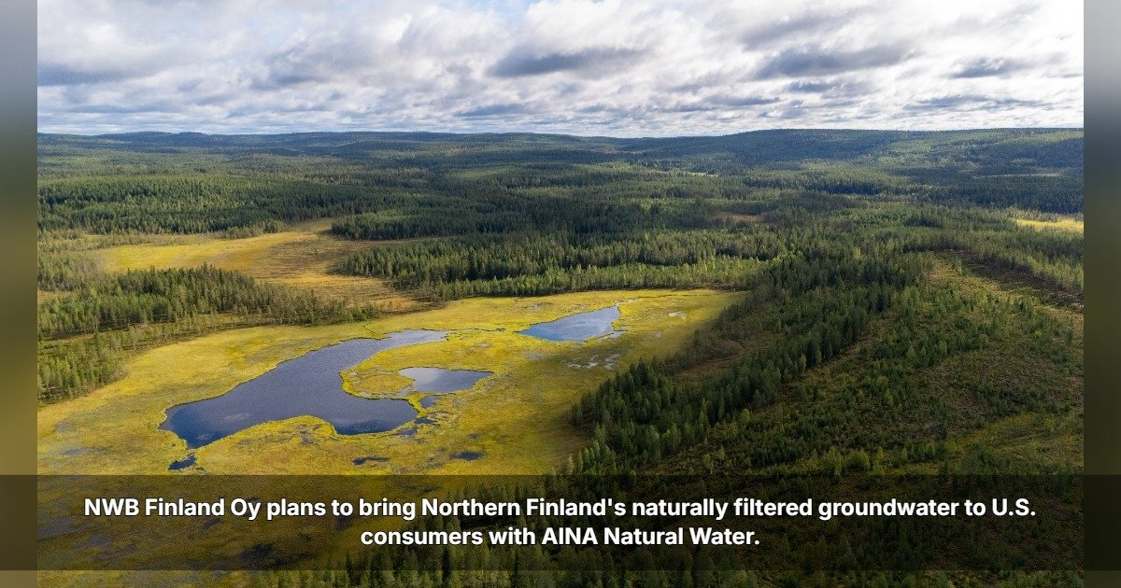
AINA Natural Water is sourced from the Pudasjärvi region in Northern Finland, an area known for its forests, relatively untouched natural landscapes and groundwater reserves. According to the company, the water is naturally filtered through layers of soil, sand and rock before undergoing mechanical filtration, a process designed to preserve its inherent characteristics while ensuring it is ready for consumption. The result, NWB says, is a water with a Total Dissolved Solids (TDS) level of roughly 32 mg/L, giving it a soft, neutral and clean taste profile suited to everyday drinking.
“AINA Natural Water brings the exceptional purity of Northern Finland to American homes,” said Marita Weiman, Quality Assurance Manager at NWB Finland Oy. “Our water comes from the Pudasjärvi region, where nature does the work, filtering the water through layers of soil, sand, and rock for a clean, soft taste.”
That emphasis on provenance is hardly accidental. In the premium water segment, origin stories matter. Consumers buying beyond the mass-market bottled category are often responding not just to hydration needs, but to perceptions of purity, place and process. Alpine springs, volcanic aquifers and glacial sources have long been marketed as differentiators; Northern Finnish groundwater offers NWB a similar narrative, reinforced by the global perception of Finland as a country associated with clean nature, pristine environments and strong environmental standards.
A packaging play as much as a water play
Yet the more strategically interesting part of NWB’s U.S. pitch may be the packaging rather than the water itself. AINA Natural Water is set to be sold in a bag-in-box format, which the company says uses substantially less plastic than traditional bottled-water packaging. In a category often criticised for its contribution to single-use plastic waste, that distinction is central to the brand’s market positioning.
The bag-in-box model is designed to appeal to settings where convenience and volume matter: households wanting a ready supply of drinking water in the refrigerator, offices seeking a practical alternative to stacked plastic bottles, and hospitality or event venues looking for a neater and potentially less wasteful hydration option. NWB plans to introduce AINA in 5-litre and 10-litre formats, sizes that suggest the company is targeting repeat-use, family and shared-consumption environments rather than only the impulse-purchase premium shelf.
“Consumers are asking for better alternatives to single-use plastic bottles,” Weiman said. “AINA’s bag-in-box format is designed to reduce plastic waste while keeping water fresh, easy to serve, and ready in the refrigerator for the whole family.”
That positioning reflects a wider shift in the beverage market. Sustainability claims have become ubiquitous, but packaging remains one of the most visible battlegrounds for brands seeking to demonstrate environmental intent in a credible, consumer-facing way. Recycled PET, aluminium cans and refill systems have all gained ground in recent years. Bag-in-box formats, while more common in categories such as wine and juice, remain less mainstream in premium water—something that could either differentiate AINA or present a challenge if U.S. consumers are slower to embrace the format.
A premium hydration market under pressure to evolve
The timing of the launch attempt is notable. The U.S. bottled water market remains one of the world’s largest, underpinned by health-conscious consumers, convenience-led habits and growing scepticism around sugary beverages. At the same time, it is under increasing pressure to address the environmental footprint of packaging, transport and waste. Premium and imported water brands have historically traded on purity and lifestyle appeal, but they are now expected to answer tougher questions around sustainability as well.
NWB appears to be positioning AINA to respond to both sides of that equation: a premium imported product with a provenance-led quality story, delivered through a format intended to reduce the amount of plastic required per litre consumed. The company highlights several attributes it believes will resonate with buyers, including the water’s low mineral content, naturally low sodium levels, soft taste profile and the convenience of a format suited to domestic and shared-use settings.
Still, building a foothold in the U.S. beverage market will require more than an appealing product story. Imported premium water is a competitive space, with established players commanding strong shelf visibility and brand recognition. For AINA, success will likely depend on how effectively NWB can position the product not merely as another imported water, but as a differentiated hydration solution that aligns with evolving consumer values around sustainability, convenience and wellness.
From Northern Finland to global shelves
For NWB Finland, the U.S. expansion is part of a broader long-term vision rather than a one-off export push. The company says it aims to make Northern Finland’s groundwater available to consumers worldwide while continuing to invest in packaging systems that reduce environmental impact. That ambition effectively places it in two businesses at once: premium natural water and sustainable beverage packaging.
If AINA can gain traction in the United States, it would validate both sides of that strategy. It would also underscore how water brands are increasingly being judged not just by the quality of what is inside the package, but by the package itself—and by the values the entire proposition communicates.
In that sense, NWB’s U.S. plans are about more than launching a new imported water. They are a test of whether a smaller European player can use source purity, low-mineral taste and packaging innovation to carve out space in one of the world’s most crowded hydration markets.